Should Showing Up Be More Than Enough?
Some disciplines only ask one thing of you: show up. Yoga is one of them. It does not care how tired you are or whether you’ve had a bad day, the only requirement is presence.
We used to place value on people who showed up because showing up meant consistency. And consistency, paired with a good attitude and a willingness to learn, has always been the seed of mastery.
So why, in 2025, does it feel like showing up is no longer enough?
Our economic systems seem misaligned. But it hasn’t always been this way. Consider the people who shaped entire fields without credentials:
Vincent van Gogh, who had no arts degree.
Nikola Tesla, who studied engineering and physics but never earned a formal degree. His expertise came through practical work in telephony and electricity.
The Wright brothers, who built the first successful airplane without formal schooling, relying instead on curiosity, reading, and relentless experimentation.
These examples remind us that learning through practice, persistence, and showing up has long been enough to produce world changing results.
Yet today, despite more people holding degrees than at any other point in history, we face a strange paradox:
Employers can’t fill roles.
Job seekers can’t find work.
Education remains the main currency of opportunity (even when it doesn’t align with industry needs.)
Right now, the system looks like this: go to school → get a job (if you’re lucky) → take on a mortgage (if you’re lucky) → die (inevitable).
Education is valuable. But we’ve let it become overvalued. What if we dialed it back, not by discarding it, but by rethinking its role?
What if employers took the lead on education and reskilling? What if showing up with consistency, curiosity, and willingness to learn counted for more than a piece of paper?
Because as W. Edwards Deming once said:
“A bad system will beat a good person every time.”
Maybe that’s the tragedy of our moment: we are surrounded by good people who keep showing up, and still, the system swallows them whole.
So the real question is this: how many more good people are we willing to waste before we decide that showing up should be enough?
Are Pranks the Key to Innovation?
Traditional TV once gave us shows like Punk’d, Jackass, and Boiling Points. To pull off a great prank, you need serious collaboration, creativity, performance skills, perfect timing, and imagination. That’s a lot like what it takes to create something truly innovative.
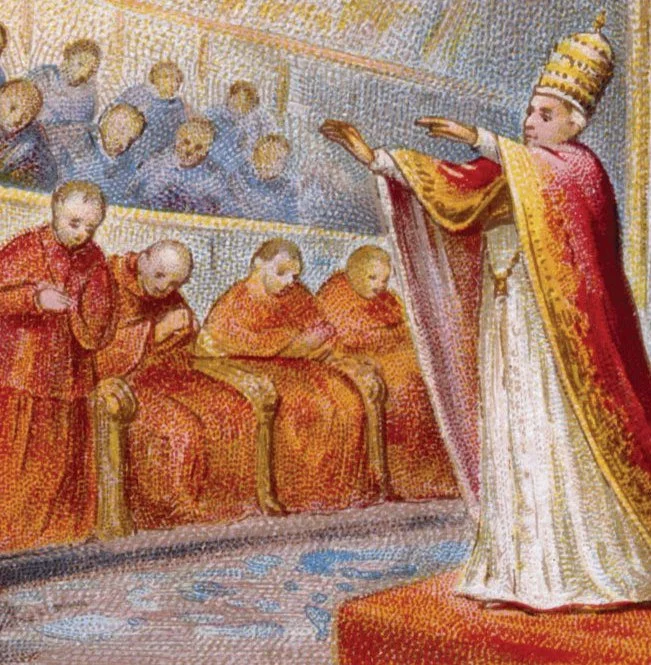
Surprisingly, some of the biggest names in tech were once pranksters themselves. The “odd couple” Steve Jobs and Steve Wozniak did not just found Apple, they started by bending the rules with their notorious “Blue Box” prank. The Blue Box was a homemade device that let them make free long-distance phone calls, which they mostly used for prank calls (including Wozniak famously pretending to be Henry Kissinger to speak to the Pope!). They ended up selling the boxes for $150 each. But more importantly, they realized they could solve complex technical problems and actually build and sell a product. That spark of rebellious playfulness gave them the confidence to take bigger risks later.
They’re not alone. Some modern teams embrace this spirit without breaking the law. Google’s famous “20% time” encouraged employees to experiment with side projects: playful, offbeat ideas that led to Gmail and AdSense. Pixar holds “Notes Day,” where employees can anonymously point out anything that’s not working (like a prank on the status quo). These creative acts might not be literal pranks, but they share the same idea: surprise, play, and pushing boundaries.
So, has our culture’s fear of disruption and our obsession with playing it safe made us forget the power of a good prank mindset?
Pranks are not always the key to innovation, but playfulness is. Rule-bending is. Doing something just because it’s fun can open up unexpected pathways. If you love what you do, try sprinkling in a little mischief — harmless experiments, inside jokes, or surprising ideas that make your team laugh and think. Just keep it legal, keep it kind, and watch how it unlocks collaboration, creativity, performance, and imagination.
In the end, the real question isn’t “Are pranks the key?” It’s: Are you willing to get playful enough to find out?
Gen Z: Build the Workplace You Deserve
We love how you’ve flipped the script on work: coining ideas like micro-retiring, embracing new ways to stay balanced, and refusing to settle for the old “live to work” mindset. Hold on to that, it truly matters.
But here’s the truth: most workplaces are still stuck in the past. We’ve spoken to plenty of managers, it is all about the numbers. Productivity. KPIS – wake, sleep and repeat.
But when work is just about numbers, people go numb.
That’s not what builds anything great. The best things humans have ever made didn’t happen because someone hit a daily metric. They happened because people cared about meaning and purpose. They took time, obsession, and they were never really “finished.”
Here’s what we’re talking about:
La Sagrada Família (Barcelona)
One of the most iconic churches in the world, started by Antoni Gaudí in 1882, is still under construction today.
Mona Lisa (Louvre Museum, Paris)
One of the most famous paintings on Earth, by Leonardo da Vinci. He worked on it for 16 years, carrying it with him everywhere. He was never satisfied, and it’s believed he kept retouching tiny details until he passed.
The Great Wall of China
One of the world’s most famous landmarks [ you can see it from space]. It was built by multiple dynasties and emperors over 2,000 + years.
What’s the lesson? True value takes time. It takes people who refuse to let systems turn them into machines. It takes work that means something.
Keep rewriting the rules. Take your “micro-retiring” when you need it because you’re not willing to be crushed by a broken system. Protect your energy for work that matters.
Because as W. Edwards Deming said:
“A bad system will beat a good person every time.”
Be the generation that fixes the system, bring back meaning. Make work human again.